Batteries
How Long a Car Battery Really Lasts in South Texas Heat
Heat kills batteries faster than cold does. What to expect from a battery in the Rio Grande Valley, and how to get the most out of the one you have.
Most battery advice on the internet is written for places that have winters. It talks about cold cranking amps and how batteries struggle in freezing weather, which is all true and almost entirely beside the point here.
In Starr County, the thing that kills your battery is July.
Heat is harder on a battery than cold
Cold weather makes a battery’s job harder on any given morning. A cold engine is stiffer to turn and a cold battery delivers less current, so a weak battery gets exposed on a freezing day. That is why battery failures get noticed in winter up north.
Heat is different. Heat does not make the battery work harder, it physically damages it. High temperatures accelerate the chemical reactions inside the case, speed up water loss from the electrolyte, and accelerate grid corrosion on the internal plates. That damage is permanent and cumulative.
The industry rule of thumb is that battery life is roughly halved for every 15 degrees Fahrenheit of sustained temperature increase above about 77 degrees. Under-hood temperatures here regularly sit well above ambient for months at a time.
What to actually expect here
Nationally you will see three to five years quoted, sometimes up to six. In the Rio Grande Valley, plan on three to four years, and treat anything past four as borrowed time.
That is not a defect and it is not a sign you bought a bad battery. It is what sustained heat does.
The practical consequence is that a battery here almost never gives you a long warning. It works fine, and then on the first genuinely hot morning it does not. Cold climates give you weeks of slow cranking as a hint. Heat damage tends to hold up right until it does not.
What makes it worse
Short trips. Starting the engine is the single biggest draw a battery ever sees, and it takes the alternator a while to put that energy back. A vehicle used for five minute errands may never fully recharge, which leaves the battery sitting partially discharged. A partially discharged battery sulfates, and sulfation is permanent capacity loss.
Corroded terminals. That white or blue crust adds resistance. Resistance means the battery never fully charges and the starter never gets full current. Cleaning terminals costs nothing and it is the highest value five minutes of maintenance on the whole vehicle.
A loose hold-down. Batteries are heavy and the internal plates are fragile. A battery that is not clamped down properly shakes itself apart on our roads. Reach in and try to move yours; it should not budge.
A charging system running slightly low. If your alternator puts out 13.2 volts instead of 14.2, everything seems normal and the battery never quite gets full. This is invisible without testing and it quietly shortens battery life by years.
Parasitic draw. Aftermarket alarms, stereos, dash cameras and modules that never sleep will pull current continuously. A small draw is harmless overnight and fatal over a two week vacation.
Getting the most out of the one you have
- Have the battery load tested annually once it is two years old, and before summer rather than after
- Clean the terminals and check that the hold-down is tight
- If the vehicle sits for more than a couple of weeks, use a maintainer
- Take it for a longer drive occasionally if your normal use is all short trips
- Have the charging output checked at the same time as the battery, since a slightly low alternator is the most common hidden cause of short battery life
Voltage is not the same as capacity
This is the part that confuses people the most.
A multimeter reading of 12.6 volts tells you the battery is charged. It says nothing about whether it can still deliver the several hundred amps a starter needs. Capacity is what fades with age and heat, and it only shows up under load.
That is why a battery can read perfectly fine in your driveway and still leave you stranded at the grocery store. It is also why we load test rather than just checking voltage, and why a quick voltage check at a counter can give false reassurance.
Get it tested before it strands you
Battery testing is quick and it is the kind of thing worth doing before a trip, before summer, or any time a vehicle has been sitting. We test the battery, the charging output and the parasitic draw together, because those three things are what actually determine whether your vehicle starts tomorrow.
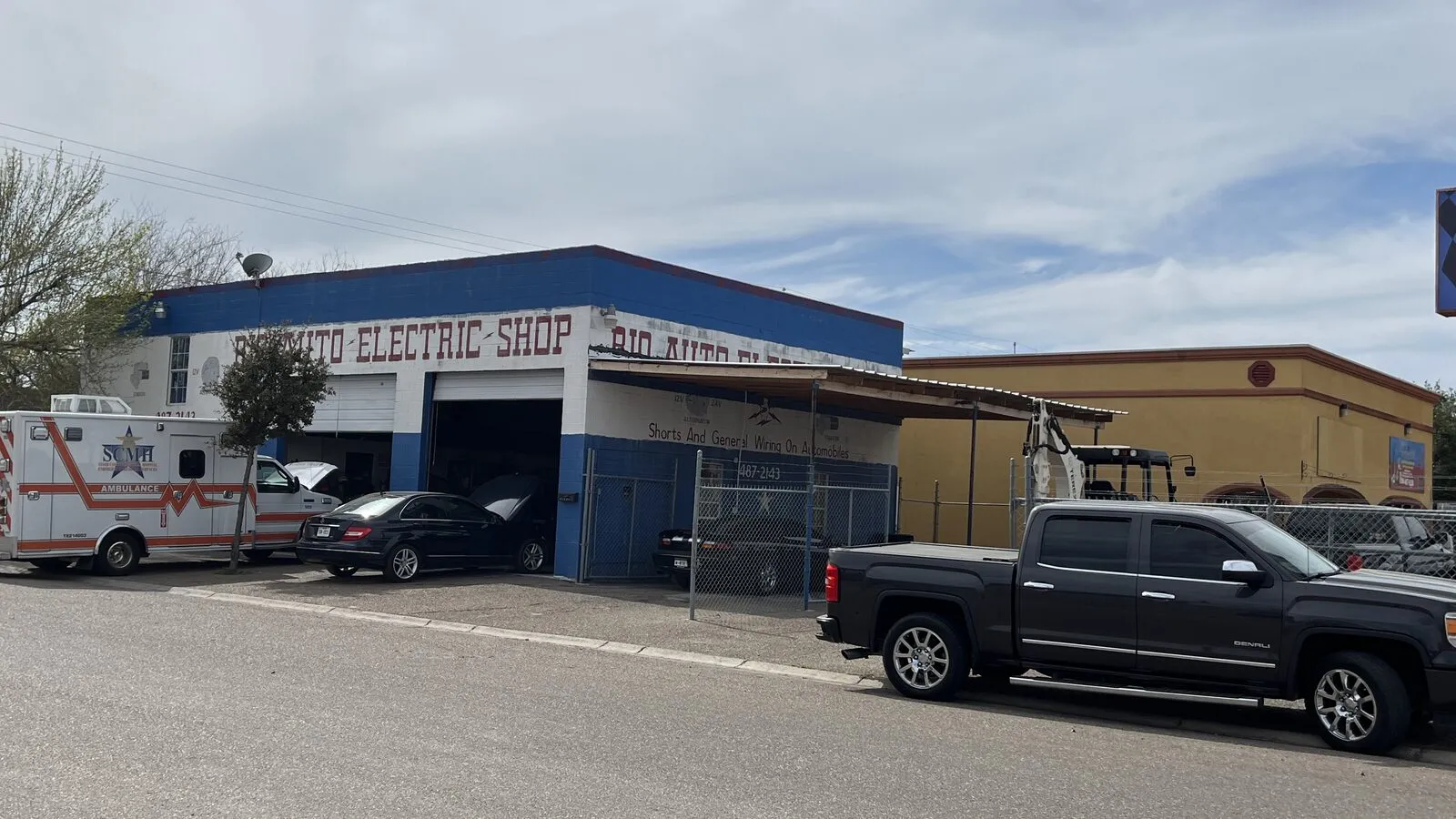
We are at 400 W Main St in Rio Grande City, open Monday through Thursday, 9 AM to 5 PM. Call (956) 487-2143.