Roma is thirteen miles east of the shop on US-83, about fifteen minutes. It is the drive people make when a charging or electrical fault needs someone who will actually trace it.
Fifteen minutes of highway between us. Here is how to play it.
1It still drives
Drive it in. Thirteen miles of straight highway is an easy run, and a vehicle that is starting intermittently today will leave you somewhere worse tomorrow.
2It will not move
Ask about a service call. Fifteen minutes each way is what the call-out covers, and for most no-start faults that still beats a tow plus the repair.
3It is a commercial truck
Tell us the make and whether it runs 12 or 24 volts. We test both, and knowing before you set off saves a wasted trip for everyone.
Roma is the second largest town in the county and it sits at a working border crossing. That mix puts ordinary cars and commercial trucks on the same stretch of highway, and both end up here.
Alternators that cannot keep up at idle
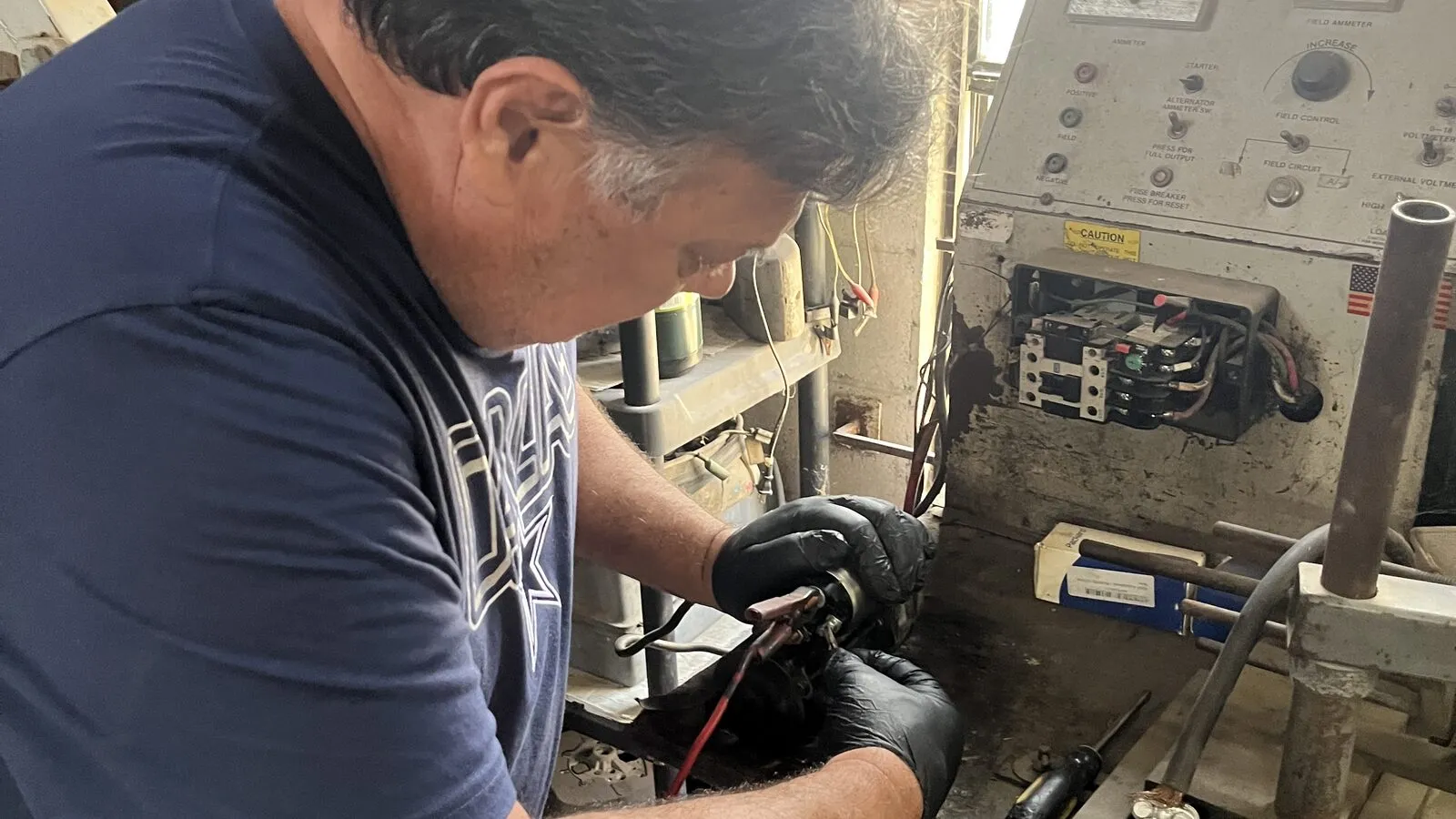
An alternator makes far less current at idle than at speed. Sit in a bridge queue with the A/C and fans running and the battery starts covering the difference. Do that daily and you kill batteries and cook alternators early. We load test across the whole RPM range, not just at a fast idle.
A/C that goes warm in stop and go
Cold on the highway, warm while you wait, is almost never low refrigerant. It is the cooling fan circuit or a condenser that cannot shed heat without airflow. Buying a can will not touch it.
No-starts and repeat dead batteries
We test the battery, the charging output and the parasitic draw as one system. A new battery does not fix a charging fault, and most repeat no-starts in this heat are a charging fault.
Commercial and 24-volt truck electrical
Truck traffic through the Roma crossing has climbed sharply since 2018, and produce and freight units carry reefer controls, inverters and added lighting the chassis was never wired for. That added equipment is usually where the fault is.
How fast you get it back
Fifteen minutes each way means dropping off in the morning and collecting the same afternoon works for a lot of jobs. Diagnosis on most electrical and starting problems takes about an hour. Call first and we will tell you whether today is realistic before you make the drive.
Service calls
Cannot get it to the shop from Roma?
A dead battery or a starter that will not turn means the vehicle is not going anywhere. We run mobile service calls out to where you are, so you are not paying for a tow just to find out what is wrong.
From Roma that is about 15 minutes of our time each way, which is what the call-out covers.
You will know the call-out charge before we leave the shop. It depends on how far out you are and what the vehicle needs, so we quote it on the phone rather than pretending there is one price for everybody.
Asking costs nothing and commits you to nothing. Tell us what the vehicle is doing, and if a tow or driving it in would work out cheaper for your situation, we will say so.
Where is the nearest auto electric shop to Roma, TX?
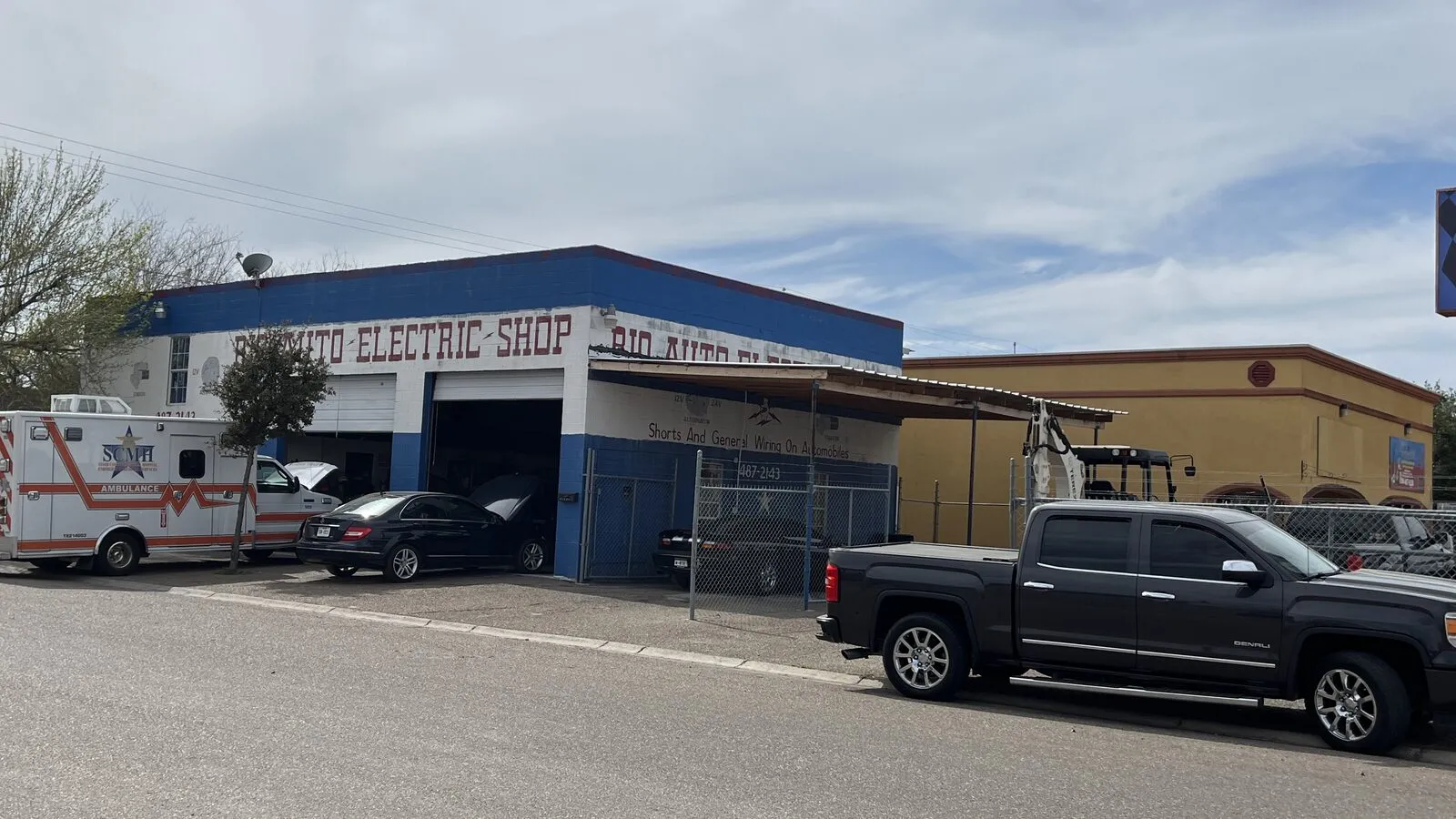
Rio Auto Electric is thirteen miles east on US-83 at 400 W Main St in Rio Grande City, about fifteen minutes. We have specialized in automotive electrical since 1997, which is why shops closer to Roma often send electrical work our way.
Is it worth driving from Roma to Rio Grande City for a repair?
For routine work, probably not, and we will say so. For an electrical fault nobody can pin down, a charging system problem or anything on a 24-volt truck, the fifteen minutes is usually why people come. Call and describe it and we will tell you honestly whether the drive is worth it.
Do you come out to Roma?
Yes, we run service calls. There is a call-out charge on top of the repair covering our time on the road, which from Roma is about fifteen minutes each way. Call and we will quote it before we leave, and if a tow works out cheaper for your situation we will say so.
My battery keeps dying and I drive to the bridge every day. Why?
Long idling is the likely culprit. An alternator produces much less current at idle than at road speed, so with the A/C, fans and accessories running while you wait, the battery makes up the shortfall and never fully recovers. Over months that ruins the battery and wears the alternator. Testing the charging output under load shows whether that is what is happening to you.