Diagnosis
Battery, Alternator, or Starter? How to Tell Which One Failed
Your car will not start. How to narrow it down to the battery, the alternator, or the starter in about two minutes, using only what you see and hear.
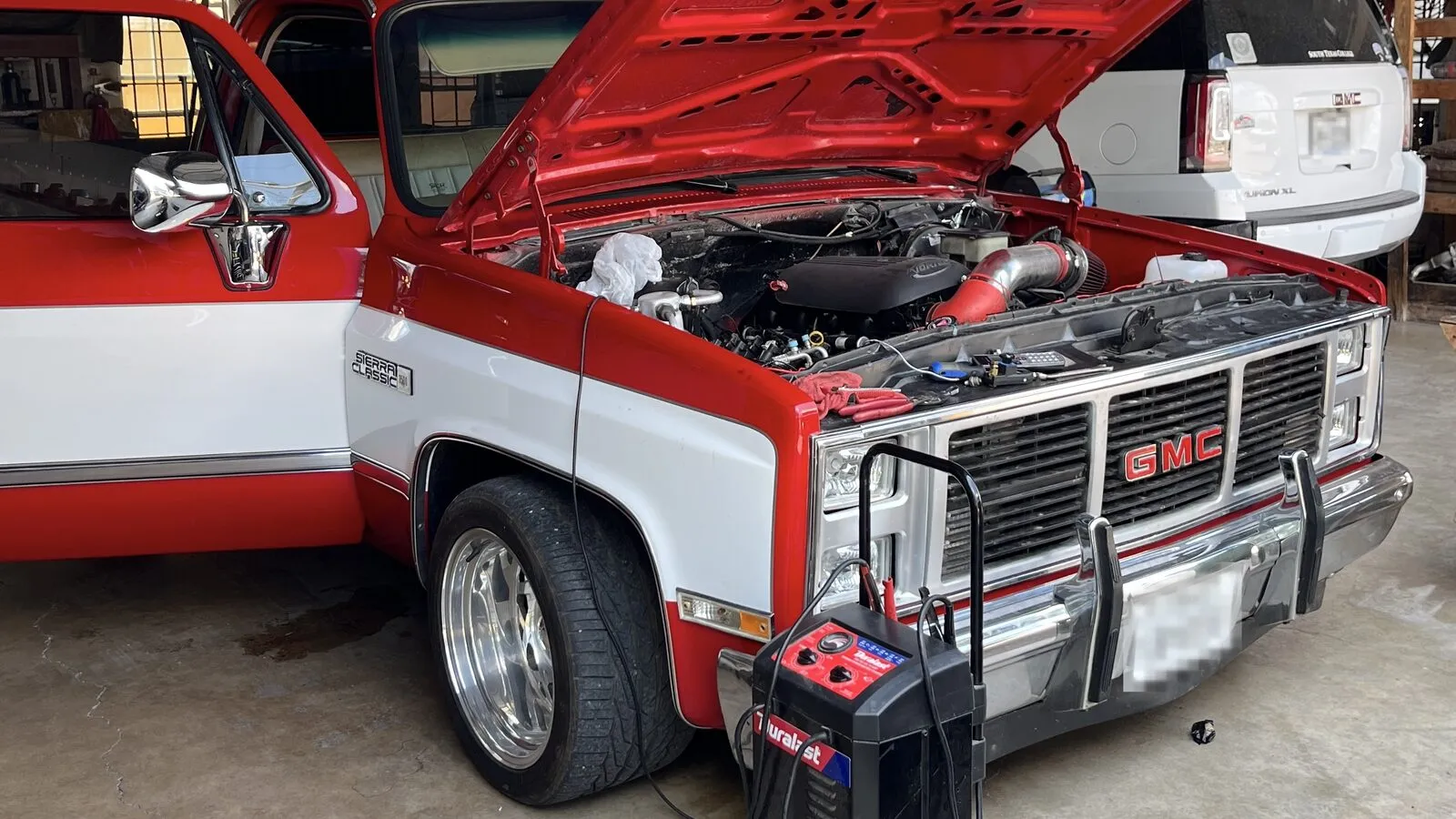
Almost every no-start call we get starts the same way: “I think I need a battery.” Sometimes that is right. Often it is not, and the customer already bought one before calling us.
These three parts work as one system, and when a vehicle will not start, any of them can be the reason. The good news is you can usually narrow it down yourself in a couple of minutes without any tools.
Start by turning the key and paying attention
Most of the answer is in what happens in the first second after you turn the key. Get in the vehicle, turn the key to start, and note which of these you get.
One loud click, and the dash lights stay bright. That points at the starter. The battery has enough power to run the lights and to fire the starter solenoid, which is the click you hear, but the starter motor itself is not turning. A bad starter, a bad solenoid contact, or a bad connection at the starter will all do this.
Rapid clicking, like a machine gun. That is almost always the battery, or the cables connecting it. There is enough charge to pull in the solenoid but not enough to hold it, so it chatters. Corroded terminals produce the same symptom on a perfectly good battery.
Nothing at all, and the dash is dark or very dim. A dead battery, a completely disconnected battery cable, or badly corroded terminals.
Slow, labored cranking that eventually catches. A weak battery, or a starter drawing more current than it should because it is wearing out.
It cranks normally but never fires. Now you are out of the electrical starting system entirely and into fuel or ignition. That is a different diagnosis.
The jump start tells you the rest
If a jump start gets the vehicle running, watch what happens next.
If it runs fine after you disconnect the cables and keeps running, your battery is likely the problem, or it was drained by something you left on.
If it dies shortly after you remove the cables, the alternator is not producing power. The vehicle was running on the donor battery, and once that was gone there was nothing keeping it alive.
If it will not take a jump at all, and you still get nothing, the problem is more likely the starter or a connection than the battery.
Signs the alternator is on its way out
An alternator rarely fails all at once. It usually gives warning, and people tend to miss it because the symptoms seem unrelated to charging.
- The battery light on the dash comes on, sometimes only at idle
- Headlights dim at a stoplight and brighten when you rev the engine
- A whining or growling noise that rises and falls with engine speed
- You replaced the battery recently and the new one is already dying
- The radio resets, or power windows move slowly, while driving
That last one catches people. If your accessories act strange while you are driving, that is a charging problem, not an accessory problem.
What we check when you bring it in
We test all three parts as one system, because testing them separately is how people end up replacing the wrong one.
- Battery load test. Voltage alone only tells you the charge level, not whether the battery can still deliver current. A battery can read 12.6 volts and still fail under load.
- Charging output. We measure what the alternator produces at idle and at speed, under electrical load, not just sitting there.
- Parasitic draw. With everything off, we measure what the vehicle is still pulling. A module that never goes to sleep will kill a battery over a weekend.
- Voltage drop across the cables. A corroded cable end has resistance you cannot see from the outside. This finds it.
- Starter current draw. A starter that pulls too much amperage is failing even if it still turns the engine today.
That whole sequence takes about an hour and it removes the guesswork. It also tells you what is about to fail, not just what already did.
The most expensive way to do this
The pattern we see most often goes like this. The vehicle will not start, so a battery gets bought. Two weeks later it will not start again, so an alternator gets bought. It happens a third time, and now the original problem, which was a corroded ground strap or a parasitic draw, is still there along with a few hundred dollars of parts that were never broken.
Testing first costs an hour. Guessing costs whatever the parts happen to be.
When to just call
If your vehicle is stranded, if you have already replaced one of these parts and the problem came back, or if you are seeing electrical symptoms while driving rather than only when starting, it is worth having it tested properly rather than working through it part by part.
We are at 400 W Main St in Rio Grande City, open Monday through Thursday, 9 AM to 5 PM. Call (956) 487-2143 and describe what the vehicle is doing when you turn the key. That description alone usually tells us a lot.