Air Conditioning
Why Your Car A/C Blows Warm Air (and Why a Recharge Rarely Fixes It)
A/C blowing warm in South Texas is not something to wait out. Here are the five common causes, and why topping off refrigerant rarely fixes it.
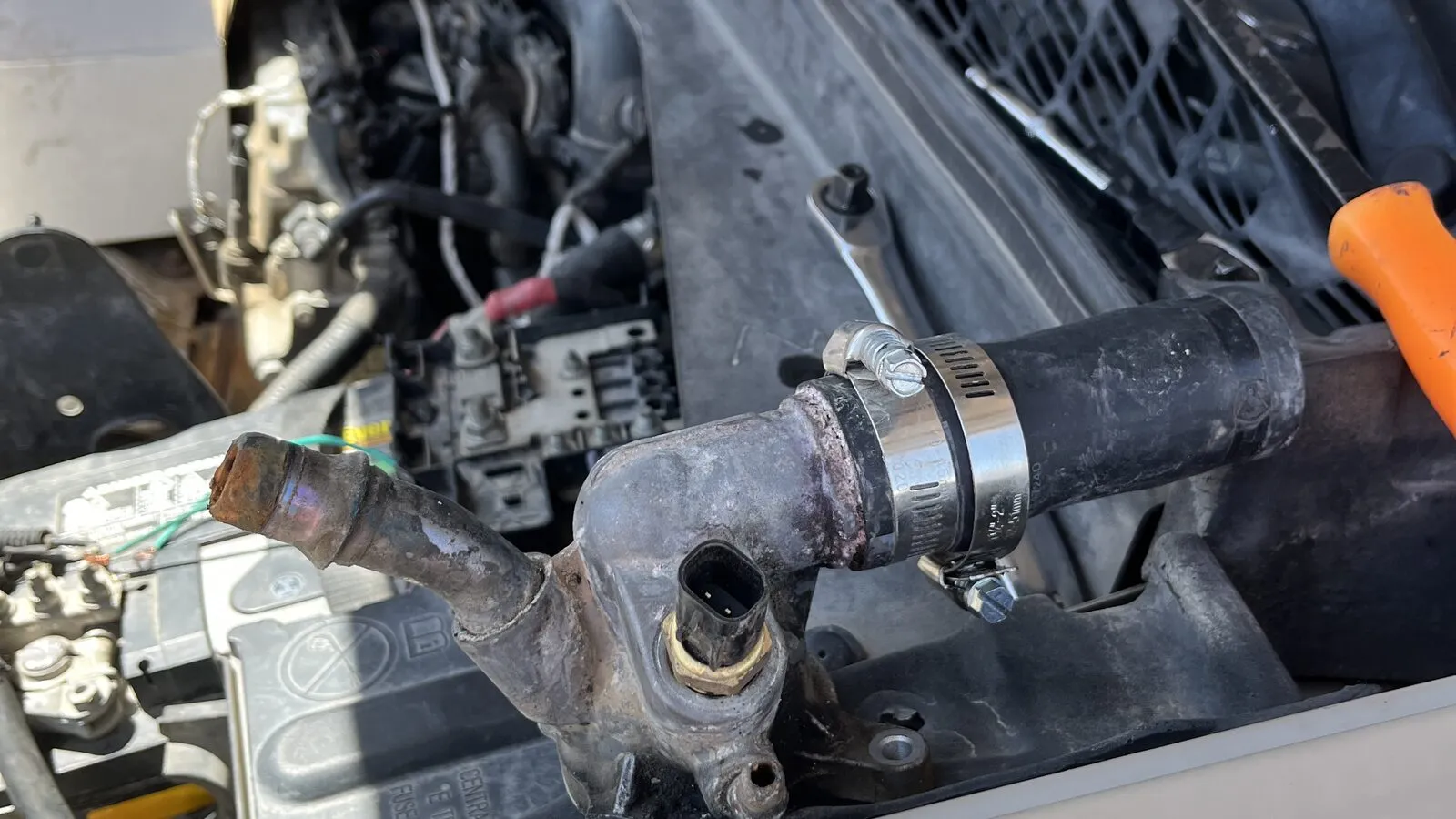
There is a can of refrigerant at every parts counter in the valley with a gauge on top and instructions promising cold air in fifteen minutes. Sometimes it works. Usually it works for about three weeks.
Here is the part the can does not tell you: air conditioning refrigerant is not a consumable. It is sealed in a closed loop. It does not burn off, wear out or get used up the way oil or brake pads do. If your system is low, refrigerant left through a hole, and that hole is still there after you top it off.
The five reasons A/C blows warm
A leak somewhere in the system
This is the most common cause, and the leaks are usually small. A hardened O-ring, a corroded condenser, a hose that rubbed through, or a pinhole in the evaporator will all let refrigerant escape slowly over months.
Finding the leak is the actual repair. We use dye or an electronic detector to locate it, fix that specific point, then evacuate the system and recharge to the factory specification. Charging a leaking system without finding the leak is putting money into the atmosphere.
The compressor clutch is not engaging
The compressor only runs when its electromagnetic clutch pulls in. If the clutch does not engage, nothing circulates and you get outside air through the vents.
The clutch itself can fail, but just as often the clutch is fine and it is never being told to engage. A low pressure switch, a relay, a fuse or a broken wire in the control circuit will all leave a healthy compressor sitting idle. This is where an electrical shop has an advantage, because the fix is often a five dollar relay rather than a compressor.
The blower or the blend door
If your air is cold but barely coming out, you have a blower problem, not a cooling problem. A classic version of this is A/C that only works on the highest fan setting, which is a failed blower resistor almost every time.
If air comes out strong but stays warm regardless of the temperature setting, suspect a blend door actuator. That is the small motor that decides how much air passes through the heater core. When it fails or sticks, the system is working correctly and the air is simply being routed the wrong way.
The cooling fan
This one has a signature symptom: cold at highway speed, warm at a stoplight.
The A/C condenser sits in front of the radiator and needs air moving across it to shed heat. At 60 mph, driving forces plenty of air through it. Sitting in traffic, the electric cooling fan has to do that job. If the fan motor, relay or temperature switch has failed, the system loses its ability to reject heat the moment you stop moving.
If that description matches what your vehicle does, do not buy refrigerant. It is an electrical fault.
An overcharged system
More is not better. A system with too much refrigerant in it will actually cool worse than a correctly charged one, because pressures climb too high for the refrigerant to change state properly. This is the usual outcome of someone using a parts store can without gauges on both sides.
What it costs to find out
Diagnosis is the cheap part. An A/C system is straightforward to test once it is on a lift with gauges connected: we read pressures on both sides, check whether the clutch engages, test the control circuit, and look for leaks.
Repair cost depends entirely on what failed. A relay or a blower resistor is minor. An O-ring is inexpensive once it is located. A condenser is a moderate job. An evaporator is a large job, not because the part is expensive, but because it lives behind the dashboard and getting to it takes most of a day.
The point is that these are wildly different repairs, and nobody can quote them honestly without testing first.
A note about older vehicles
If your vehicle is from the mid-1990s or earlier, it may have originally run R-12, which has not been produced in the United States for decades. Most have been converted to R-134a by now, but not all conversions were done well. If you have an older car or truck that has never cooled right since a conversion, that history matters and is worth mentioning when you call.
Before it gets hot
The best time to have A/C looked at is before you need it. Summer here is not a season you want to negotiate with a marginal system, and a small leak found in March is a much smaller repair than a compressor that ran itself dry in July.
We are at 400 W Main St in Rio Grande City, open Monday through Thursday, 9 AM to 5 PM. Call (956) 487-2143.